



A safe work permit is a written record that authorizes specific work, at a specific work location, for a specific time period. Permits are used for controlling and co-coordinating work to establish and maintain safe working conditions. They ensure that all foreseeable hazards have been considered and that the appropriate precautions are defined and carried out in the correct sequence. The permit is an agreement between the issuer and the receiver that documents the conditions, preparations, precautions, and limitations that need to be clearly understood before work begins. The permit records the steps to be taken to prepare the equipment, building, or area for the work, and the safety precautions, safety equipment, or specific procedures that must be followed to enable the worker(s) to safety complete the work. The safe work permit helps to identify and control hazards, but does not, by itself, make the job safe.
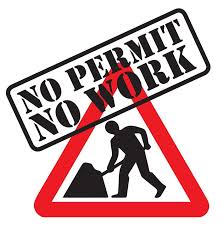 Benefits from a work permit program
- Any industry that has a significant risk because of particular hazards.
- Any prime contractor who lets out or sub-contracts work to others to do maintenance or other hazardous work.
- Organizations that have individual employees working in isolated areas and performing non-routine work.
Importance of Work Permit
All work exposes the worker to some degree of hazard. This degree of hazard determines the type of safeguards required to protect the worker. Most routine work has defined safe work practices or procedures. In the absence of such procedures, safe work permits should be used. Workers engaged in maintenance work may be at risk if the machinery they are working on is started unexpectedly. Such machinery and equipment needs to be isolated by blanking, blinding, or a power lockout system.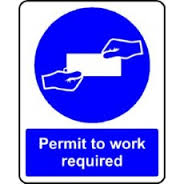
These procedures can be clearly identified by a work permit system. Certain types or conditions of work, such as confined space entry, flammable or explosive situations, exposure to harmful substances or high voltage electrical equipment, and the transfer of hazardous work from one work shift to the next are examples of where safe work practices or the use of work permits is essential. Occupational Health and Safety (OHS) Act and OHS Regulation require employers to provide workers with a safe place of work and to identify known safety hazards. This can be partly achieved through the use of a safe work permit system. Verbal instructions can be misinterpreted or forgotten, whereas a great deal of control is achieved through the use of safe work practices or safe work permits.
Types of safe work permits
The type of safe work permit required is determined by the nature of
the work to be performed and the hazards that must be controlled or
eliminated. The range of activities and locations makes it impossible
for a single type of permit to be suitable for all situations. The
following types are most commonly used and examples are provided at the
end of this Safety Bulletin.Hot Work Permit
Hot work permits are used when heat or sparks are generated by work such as welding, burning, cutting, riveting, grinding, drilling, and where work involves the use of pneumatic hammers and chippers, non-explosion proof electrical equipment (lights, tools, and heaters), and internal combustion engines.Working at heights is one of the most high-risk activities in any industry. That's why it's crucial to implement strict safety protocols to protect your workers and comply with HSE regulations.
Work at height is work in any place, including a place at, above or below ground level, where a person could be injured if they fell from that place. Access and egress to a place of work can also be work at height.
Authorization to work on elevated spaces (2m from the ground) be it ladders, scaffolds, Mobile Elevated Work Platforms (MEWP) and other spaces that are off the ground.
Electrical work permit
Electrical work permits are necessary for tasks involving electrical systems, such as repairs, maintenance, or installations. These permits help in identifying potential electrical hazards, ensuring lockout/tagout procedures, and using insulated tools to prevent shocks and electrocutions.
Scaffolding work permit
Scaffolding permit-to-work systems are a vital component of construction projects, ensuring the safety of workers and compliance with safety regulations. By implementing these systems, construction professionals can create a secure work environment and mitigate potential risks associated with scaffolding operations.
- Scaffolding permit-to-work systems are crucial for safety and compliance in construction projects.
- Construction permit software plays a significant role in managing permit-related activities.
- Scaffold inspection checklists help identify potential hazards and maintain the structural integrity of scaffolds.
- Compliance with safety regulations is essential for worker well-being and project success.
- Adopting digital solutions streamlines the permit-to-work process and improves efficiency.


No comments:
Post a Comment