
Showing posts with label Tools Safety. Show all posts
Showing posts with label Tools Safety. Show all posts
Monday, 11 August 2025

Wednesday, 19 March 2025
Saturday, 15 March 2025
Monday, 10 February 2025
Monday, 2 December 2024
TS : Portable Hand Circular Saws
Topic:- Tools Safety
PORTABLE HAND CIRCULAR SAWS
Circular saws are used mainly for the cutting of timber and ply for formwork etc, but how many of you actually check the saw before you start to use it?

· Swing Guard - does it
return to cover the teeth of the blade?
· Riving Knife - is it
still there and straight
· Trigger switch and
trigger safety interlock operating correctly?
· Blade, is it sharp
with a full set of teeth – if not return to the stores.
· Are the depth and
angle adjustments screws working / tight?
· Has the sawdust outlet
been cleaned (power disconnected)?
· Check the electric
cable and plug are in good condition?
· Check the date tag–is
it still in date / 3 months since last inspection?
· What about PPE? Dust
masks, safety glasses and hearing protection should be used as appropriate.
Other
general safety points to be considered:
· For blade adjustments
always disconnect the power supply.
· Do not carry the saw
by the electric cable.
· When cutting keep
supply cable clear of blade.
· Hold the saw firmly,
let the saw do the work, don’t stall it
· Ensure the wood being
cut is secured / clamped.
· Ensure the saw table
and surrounding area is free of debris
· Check under the work
piece for cables and tools
· Keep flapping clothing
buttoned up
A daily check will only take
a minute, an accident only take a second but hospital takes days
Wednesday, 25 September 2024
TS : Safe Use of Chain Saws
Safe Use of Chain Saws

A chainsaw (alternatively spelled chain saw) is a portable, mechanical saw which cuts with a set of teeth attached to a rotating chain that runs along a guide bar. It is used in activities such as tree felling, limbing, bucking, pruning etc.
Controls and precautions to be observed while using chain saws :
- All chainsaw operators should have received formal training.
- Before using a chainsaw carry out the following checks:
- Check guards are in place, in good condition and secure.
- Check chain brake operation (if fitted).
- Check throttle and interlock for serviceability.
- Ensure you have the required PPE and that it is serviceable. This must include leggings.
- Always engage the chain brake and place saw on a secure surface clear of any obstructions before starting.
- Never make adjustments to the chainsaw whilst it is running.
- Never place any part of your body in the saw’s line of cut.
- Before moving with the chainsaw, switch it off, (apply the chain brake), and fit the scabbard over the chain. Carry by front handle with chain facing rearwards.
- Maintain a firm grip, using both hands, on the chainsaw when in operation.
- Stop saw motor before fueling.
- Check for fuel leakage and ensure fuel cap is correctly replaced.
- Refuel chainsaws in well-ventilated areas and at least 3 meters away from where you are going to use the chainsaw.
Saturday, 15 June 2024
TS : General Safety While Using Work Tools
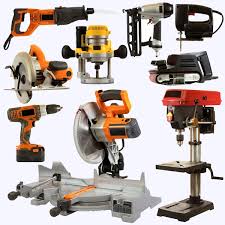
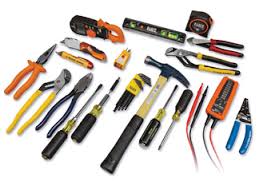
Portable, bench or floor mounted power tools and equipment need routine maintenance, inspection and adjustments to ensure safe operation. Tool bits, blades and other changeable parts must be kept sharp and free from damage. Electrical systems, belts & pulleys and gears must be properly guarded to prevent exposing employees to hazards.
Tool General Safety Precautions:
Employees who use hand and power tools and who are exposed to the hazards of falling, flying, abrasive and splashing objects, or exposed to harmful dusts, fumes, mists, vapors, or gases must be provided with the particular personal equipment necessary to protect them from the hazard.All hazards involved in the use of tools can be prevented by following five basic safety rules:
- Keep all tools in good condition with regular maintenance.
- Use the right tool for the job.
- Examine each tool for damage before use.
- Operate according to the manufacturer's instructions.
- Provide and use the proper protective equipment.
Hand Tools:
Hand tools are non-powered. They include anything from axes to wrenches. The greatest hazards posed by hand tools result from misuse and improper maintenance.Some examples:- Using a screwdriver as a chisel may cause the tip of the screwdriver to break and fly, hitting the user or other employees.
- If a wooden handle on a tool such as a hammer or an axe is loose, splintered, or cracked, the head of the tool may fly off and strike the user or another worker.
- A wrench must not be used if its jaws are sprung, because it might slip.
- Impact tools such as chisels, wedges, or drift pins are unsafe if they have mushroomed heads.
Basic tips when using hand tools:
- Always provide training on how to choose the right tool for the job, how to correctly use each tool, and how to identify when tools need repair.
- Select the right tool for the job. Substitutes increase the chance of having an accident.
- Use tools designed to allow wrist to stay straight. Avoid using hand tools with your wrist bent.
- Ensure that employees are properly trained in the safe use of hand tools.
- Use good quality tools.

- Keep tools in good condition at all times.
- Inspect tools for defects before use. Replace or repair defective tools.
- Keep cutting tools sharp and cover sharp edges with suitable covering to protect the tool and to prevent injuries from unintended contact.
- Replace cracked, splintered, or broken handles on files, hammers, screwdrivers, or sledges.
- Ensure that the handles of tools like hammers and axes fit tightly into the head of the tool.
- Replace worn jaws on wrenches, pipe tools and pliers.
- Redress burred or mushroomed heads of striking tools.
- Pull on a wrench or pliers. Never push unless you hold the tool with your palm open.
- Point sharp tools (e.g., saws, chisels, knives) laying on benches away from aisles and handles should not extend over the edge of the bench top.
- Maintain tools carefully. Keep them clean and dry, and store them properly after each use.
- Carry tools in a sturdy tool box to and from the work site.
- Wear safety glasses or goggles, or a face shield (with safety glasses or goggles) and well-fitting gloves appropriate for the hazards to which you may be exposed when doing various tasks.
- Keep the work environment clean and tidy to avoid clutter which may cause accidents.
- Use a heavy belt or apron and hang tools at your sides, not behind your back.
Power Tool Precautions:
Power tools can be hazardous when improperly used. There are several types of power tools, based on the power source they use: electric, pneumatic, liquid fuel, hydraulic, and powder-actuated.The following general precautions should be observed by power tool users:The following general precautions shall be observed by power tool users:
- Never carry a tool by the cord or hose;
- Never remove prongs from any cords;
- Never stand in or near water when using tools;
- Always use a Ground Fault Circuit Interrupter (GFCI) with electrical tools if working in a wet environment;
- Never “yank” the cord or the hose to disconnect it from the receptacle;
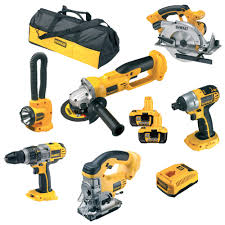
- Keep cords and hoses away from heat, oil and sharp edges;
- Replace all frayed and/or damaged extension cords. Do not try to tape cords;
- Disconnect tools when not in use, before servicing and when changing accessories such as blades, bits and cutters;
- All observers shall be kept at a safe distance away from the work area;
- Secure work with clamps or a vise, freeing both hands to operate the tool;
- Avoid accidental starting. The worker shall not hold a finger on the switch button while carrying a plugged-in tool;
- Tools shall be maintained with care. They shall be kept sharp and clean for the best performance. Follow instructions in the user’s manual for maintenance, lubricating and changing accessories;
- Maintain good footing and balance;
- Avoid loose fitting clothes, ties or jewelry such as bracelets, watches or rings, which can become caught in moving parts;
- Use tools that are either double-insulated or grounded (three-pronged);
- Keep work area well lit when operating electric tools;
- Ensure that cords and hoses do not pose as a tripping hazard; and
- All portable electric tools that are damaged shall be removed from use and tagged “Do Not Use”. This shall be done by supervisors and/or employees.
Tool Guards:
Hazardous moving parts of a power tool need to be safeguarded. For example, belts, gears, shafts, pulleys, sprockets, spindles, drums, fly wheels, chains, or other reciprocating, rotating, or moving parts of equipment must be guarded. Guards, as necessary, should be provided to protect the operator and others from the following: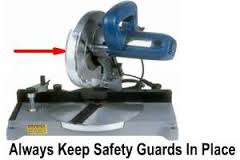
- point of operation,
- in-running nip points,
- rotating parts, and
- flying chips and sparks.
Tool Safety Switches:
The following hand-held powered tools are to be equipped with a momentary contact "on-off" control switch: drills, tappers, fastener drivers, horizontal, vertical and angle grinders with wheels larger than 2 inches in diameter, disc and belt sanders, reciprocating saws, saber saws, and other similar tools. These tools also may be equipped with a lock-on control provided that turnoff can be accomplished by a single motion of the same finger or fingers that turn it on.The following hand-held powered tools may be equipped with only a positive "on-off" control switch: platen sanders, disc sanders with discs 2 inches or less in diameter; grinders with wheels 2 inches or less in diameter; routers, planers, laminate trimmers, nibblers, shears, scroll saws and jigsaws with blade shanks ¼-inch wide or less.Other hand-held powered tools such as circular saws having a blade diameter greater than 2 inches, chain saws, and percussion tools without positive accessory holding means must be equipped with a constant pressure switch that will shut off the power when the pressure is released.
Tool Electrical Safety:
Among the chief hazards of electric-powered tools are burns and
slight shocks which can lead to injuries or even heart failure. Under
certain conditions, even a small amount of current can result in severe
injury and eventual death. A shock also can cause the user to fall off a
ladder or other elevated work surface.To protect the user from shock,
tools must either have a three-wire cord with ground and be grounded, be
double insulated, or be powered by a low-voltage isolation transformer.
Three-wire cords contain two current-carrying conductors and a
grounding conductor. One end of the grounding conductor connects to the
tool's metal housing. The other end is grounded through a prong on the
plug. Anytime an adapter is used to accommodate a two-hole receptacle,
the adapter wire must be attached to a known ground. The third prong
should never be removed from the plug.Double insulation is more
convenient. The user and the tools are protected in two ways: by normal
insulation on the wires inside, and by a housing that cannot conduct
electricity to the operator in the event of a malfunction.
Electric Power Tool General Safety Practices:
- Electric tools should be operated within their design limitations.
- Gloves and safety footwear are recommended during use of electric tools.
- When not in use, tools should be stored in a dry place.
- Electric tools should not be used in damp or wet locations.
- Work areas should be well lighted.
Powered Abrasive Wheel Tools:
Powered abrasive grinding, cutting, polishing, and wire buffing wheels create special safety problems because they may throw off flying fragments. Before an abrasive wheel is mounted, it should be inspected closely and sound- or ring-tested to be sure that it is free from cracks or defects. To test, wheels should be tapped gently with a light non-metallic instrument. If they sound cracked or dead, they could fly apart in operation and so must not be used. A sound and undamaged wheel will give a clear metallic tone or "ring." To prevent the wheel from cracking, the user should be sure it fits freely on the spindle. The spindle nut must be tightened enough to hold the wheel in place, without distorting the flange.Power Tool Safety Fact Sheet:
Powered Hand & Portable Tools - OSHA Standard 1910.242Other Portable Tools - OSHA Standard 1910.244Machine Guarding - OSHA Standard 1910.212Grinders - OSHA Standard 1910.215Portable, bench or floor mounted power tools and equipment need routine maintenance, inspection and adjustments to ensure safe operation. Tool bits, blades and other changeable parts must be kept sharp and free from damage. Electrical systems, belts & pulleys and gears must be properly guarded to prevent exposing employees to hazards.
Hazards:
- Noise.
- Electric Shock.
- Amputation.
- Chemical exposure.
- Lacerations & Abrasions.
- Eye Injury from flying particles.
- Respiratory hazards from dust & cutting fluids.
Personal Protective Equipment Check:
- Eye protection- clean safety glasses & face shield.
- Hearing protection for noisy machines & operations.
- Hand Protection - Leather Work Gloves.
- Use Proper Respirator when using cutting fluids.
- Use Proper Respirator for task that produce dust.
- Use proper gloves when applying any chemical.
- Wear Safety Glasses when using hand tools.
- For heavy work & tools - wear steel toed work boots.
- Use anti-vibration gloves for tools that vibrate
Work Area Safety Check:
- Well lighted.
- Not in traffic area.
- No slip or trip hazards.
- No standing water.
- Keep tools off the floor/ground - prevent trips.
- Rig extension cords above waist level.
- Don't block traffic areas with tools.
- Use warning tape to boundary work areas.
- Keep work area clear of excessive material & debris
Pre - Use Safety Check:
- Bench or Floor mounted tool is securely mounted.
- Check switch not damaged.
- Check to ensure there are no exposed wires.
- Cords are free from work area
- Guards are in place and properly adjusted.
- Tool casing not cracked or broken.
- Check grinding wheels are rated for higher speed than machine RPM.
- Grinder tool rest gap to wheel is no larger than 1/8 inch.
- Conduct "ring" test for all new grinder stones - ensure no cracks, breaks or chips.
- Unplug before changing cutting tools.
- Ensure power tools are grounded or double insulated.
- Check electric cords for damage.
- Ensure bits and blades are sharp.
- Check hose connections for pneumatic tools
Operation Safety:
- Use a safe position, avoid leaning or over-reaching.
- Use tool rest - no free hand operations.
- Dress wheels as needed to prevent buildup and over heating.
- Stand aside from equipment when starting.
- Keep hair, sleeves and jewelry out of work area.
- Replace dull cutting tools.
- Keep others clear of your immediate area.
- Pass tools handle first.
- Don't use tools in awkward positions.
- Cover all sharp blades & tools bits.
- Unplug before adjusting or changing accessories.
- Keep cords away from heat, oil, and sharp edges.
- Disconnect tools when not in use.
- Secure work with clamps or vise.
- Remove all damaged tools from use.
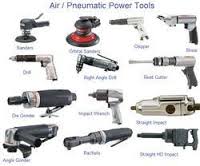
Pneumatic tools:
Use pneumatic tools safely:
- Review the manufacturer's instruction before using a tool.
- Wear safety glasses or goggles, or a face shield (with safety glasses or goggles), and, where necessary, safety shoes or boots and hearing protection.
- Post warning signs where pneumatic tools are used. Set up screens or shields in areas where nearby workers may be exposed to flying fragments, chips, dust, and excessive noise.
- Ensure that the compressed air supplied to the tool is clean and dry. Dust, moisture, and corrosive fumes can damage a tool. An in-line regulator filter and lubricator increases tool life.
- Keep tools clean and lubricated, and maintain them according to the manufacturers' instructions.
- Use only the attachments that the manufacturer recommends for the tools you are using.
- Be careful to prevent hands, feet, or body from injury in case the machine slips or the tool breaks.
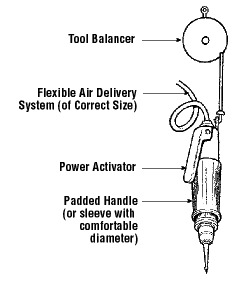
- Reduce physical fatigue by supporting heavy tools with a counter-balance wherever possible.
Handle air hoses:
- Use the proper hose and fittings of the correct diameter.
- Use hoses specifically designed to resist abrasion, cutting, crushing and failure from continuous flexing.
- Choose air-supply hoses that have a minimum working pressure rating of 1035 kPa (150 psig) or 150% of the maximum pressure produced in the system, whichever is higher.
- Check hoses regularly for cuts, bulges and abrasions. Tag and replace, if defective.
- Blow out the air line before connecting a tool. Hold hose firmly and blow away from yourself and others.
- Make sure that hose connections fit properly and are equipped with a mechanical means of securing the connection (e.g., chain, wire, or positive locking device).
- Install quick disconnects of a pressure-release type rather than a disengagement type. Attach the male end of the connector to the tool, NOT the hose.
- Do not operate the tool at a pressure above the manufacturer's rating.
- Turn off the air pressure to hose when not in use or when changing power tools
- Do not carry a pneumatic tool by its hose.
- Avoid creating trip hazards caused by hoses laid across walkways or curled underfoot.
- Do not use compressed air to blow debris or to clean dirt from clothes.
TS : Pneumatic Work Tool
Pneumatic Work Tools
Pneumatic tools are powered by compressed air and include chippers, drills, hammers, nail and staple guns and others. Air-powered tools present the same hazards as their electrically powered counterparts, plus hazards you may not have considered.
Hazards to watch for:
Safe procedures:

Pneumatic tools are powered by compressed air and include chippers, drills, hammers, nail and staple guns and others. Air-powered tools present the same hazards as their electrically powered counterparts, plus hazards you may not have considered.
Hazards to watch for:
- Potential to be hit by one of the tool’s attachments you are using with the tool.
- Inappropriate air pressure can cause the tool to malfunction.
- Excessive noise levels.
- Flying particles created by tool or by blowing air.
Safe procedures:
- Review manufacturer’s instructions before use.
- Ensure proper air pressure for the tool.
- Pressure that is too high can cause too much torque and excessive force causing tool or work piece breakage and injury.
- Pressure that is too low may cause the tool to under perform, which may encourage the user to apply excessive force causing tool breakage and injury.
- Wear appropriate hearing protection. Pneumatic tools discharge exhaust air at or near the tool which typically is not muffled.
- Be aware of the potential for oil or antifreeze in the supplied air being discharged in the user’s work environment.n Ensure proper ventilation.
- If hands become oily, frequently wipe hands and tools to prevent loss of grip.
- Wear gloves when necessary. If the air discharges on the user’s hands the temperature could be low enough to cause fingers to stiffen or even cause frostbite.
- Ensure that all electrical power in the immediate work area is isolated to prevent electrical shock.
- Inspect air hoses for cuts, bulges, and abrasions and protect hoses from damage. If an air hose is severed, it can whip around violently until the air is shut off.
- Always wear eye and face protection. Compressed air and particles may fly from equipment and cause pain and injury.
- Do not use compressed air for cleaning unless no alternate method of cleaning is available. When used for cleaning, the nozzle pressure must remain below 30 psi.
- Do not carry any pneumatic tool by its hose.
TS : Angle Grinder & Wheel Safety
Angle Grinder & Wheel Safety
Angle grinders are used for metalwork and fabrication such as grinding down welds. They are commonly used in workshops, construction, service garages and auto body repair shops. Angle grinders can be dangerous due to the high rpm involved, sparks and bits of metal that fly off as they cut and the need to remove guards to make awkward grinds.
 |
| Safety Videos |
Angle grinders are used for metalwork and fabrication such as grinding down welds. They are commonly used in workshops, construction, service garages and auto body repair shops. Angle grinders can be dangerous due to the high rpm involved, sparks and bits of metal that fly off as they cut and the need to remove guards to make awkward grinds.
The most common injuries suffered when using a grinding wheel are foreign body in eye and hand abrasions. Failing to wear adequate eye protection because "this will only take a second" or "somebody forgot to leave the glasses on the hook above the grinding wheel and I'll have to find another pair before using the grinder" is the main ingredient in an accident waiting to happen.

Following the safety policies and rules that have been established will greatly reduce the possibility of being injured while operating a grinding wheel.
Small metal shavings flying off a grinding wheel are often traveling over 200 miles per hour over a distance of less than 18 inches. The old baseball adage of" you can't hit what you can’t see" certainly holds true for anyone who thinks eye protection isn't needed.
Hazards to watch for:
Safe procedures to follow:
Most angle grinder injuries are from metal particles lodging in the operator’s eye.
Safety Videos - Kickback, where the disc is thrust away from the object it is grinding, can result in severe cuts to hands, arms, head, torso and legs.
- Discs can shatter or explode, sending pieces flying across the work area.
Safe procedures to follow:
- Wear wide vision goggles, or safety glasses and a face shield.
- Always use the correct type of disc. Make sure the disc speed limit (rpm) is greater than the angle grinder operating speed.
- Ensure the guard and handles are secure.
Ensure the correct flange and locking nut are used for the type of disc. Otherwise the disc can shatter at high speed.
Safety Videos - Ensure the disc is not defective or damaged.
- Allow the grinder to “run up” to operating speed before applying it to the job.
- Hold the grinder against the work piece with minimum pressure so the disc doesn’t “dig in” and cause it to kick back.
- Never bump the grinder on to the work, or let the disc hit any other object while grinding.
- Keep the grinding disc at a 15 to 30 degree angle to the work.
- Ensure the work piece is held firmly in a bench vice when appropriate.
- Keep the work at waist height during grinding.
- Stop the grinder regularly to rest your hands and arms.
- When not in use, disconnect the power and place the grinder on a bench with the disc facing upwards.
- Never put a grinder down until the disc stops rotating.
- Disconnect power before changing discs.
- Never use a cut off wheel for grinding or a grinding disc for cutting.
- Dispose of any disc that has been dropped. Cracked or weakened discs can shatter in use.
HAZARDS ASSOCIATED WITH GRINDING WHEELS
- Failure to use eye protection by the operator in addition to the eye shield mounted on the grinder
- Incorrectly holding the work.
- Incorrect adjustment or lack of work rest.
- Wrong type, poorly maintained or unbalanced wheel or disk.
- Grinding on the side of the wheel not designed for grinding.
- Taking too heavy a cut.

- Applying work to too quickly to a cold wheel or disk.
- Grinding too high above the wheel center.
- Failure to use wheel washers (blotters).
- Vibration and/or excessive operation speed which leads to a bursting wheel or disk.
- Using bearing boxes with insufficient bearing surface.
- Using spindles with an incorrect diameter, or threads cut so that the nut loosens as the spindle revolves.
- Installing flanges of the wrong size with unequal diameters or unrelieved centers.
- Incorrect wheel dressings.
- Contacting unguarded moving parts.
- Using controls that are out of the operator's normal reach.
- Using an abrasive saw blade rather than a grinder disk.
- Failure to run a wet wheel dry (without coolant) for a period of time before turning off the machine.
- A wet wheel can become unbalanced if the coolant is allowed to accumulate on a portion of the wheel.
- This unbalanced condition can cause a wheel to disintegrate upon restarting.
- Using an untested, broken, or cracked grinding wheel.


Conclusion:
While angle grinders have several serious hazards, safe use will minimize those hazards. Let’s review the major points that apply to our work here and my expectations.
Visit for Safety Videos: https://www.youtube.com/channel/UChREXvbLQ3fPxOLKflPRj_g
TS : Safe Usage Of HAMMER's
Safe Usage Of HAMMER's

How
many kinds of hammers are there, including claw, sledge, bricklayer's,
peen, chipping, tack, and soft faced. Maybe you can think of others.
The
following suggestions can help to keep you from injuring yourself or
ruining the tool, no matter what kind of hammer you use.
1. USE THE RIGHT TYPE AND SIZE HAMMER FOR THE JOB.
Use
a carpenter's hammer, for example, for driving or pulling nails. Not
for striking star drills or cold chisels. Don't use a lightweight hammer
for a heavy job. You'll work harder and increase the chances of hurting
yourself or damaging the tool.
2. STRIKE THE SURFACE SQUARELY
Always
using the head of the hammer and never the side. A glancing blow
increases your chances of striking a finger or chipping the hammer head.
Don't strike one hammer with another. Hammerheads are made of hardened
steel, and pieces may chip off and fly.
3. CONTROL THE HAMMER
By
holding it toward the end of the handle. Beginners have a tendency to
choke up on the handle, reducing the force of the blow and making it
difficult to hit the target squarely.
4. WEAR SAFETY GLASSES
To protect your eyes against flying chips when striking objects such as chisels, punches, and drills.
5. BE SURE THE TARGET IS STATIONARY AND FIRM.
When
driving stakes or hitting a large cold chisel, be sure the person
holding the work uses tongs. This will protect him from being hit a
glancing blow.
6. KEEP HAMMERS CLEAN AND IN GOOD CONDITION.
You can get into trouble by using a hammer with a loose or worn head, or one that has a cracked or broken handle.
TS : Safe Usage Of Screwdrivers
Safe Usage Of Screwdrivers
More than any other tool, the screwdriver is used for jobs it was never meant to do. People use them for chipping, chiselling, scraping, prying, digging, gouging, testing circuits, making holes, stirring paint, propping doors open, and taking the lids off cans.
 |
Safety Videos |
However, the most common abuse of the screwdriver is using one that doesn’t fit or match the screw. That means using a screwdriver too big or small for the screw or not matched to the screw head.
The results are cuts and puncture wounds from slipping screwdrivers.
Controls Measures
Use the right screwdriver for the job. This means the right kind of tip—slot, Robertson, Phillips, whatever. It also means use the right size of screwdriver. One that is too big or small for the screw can only lead to trouble. You’ll chew up the screw head, damage the screwdriver, gouge the material, or scrape your knuckles.
NOTE: All cross point screws are not designed to be driven by a Phillips screwdriver. Phillips screws and drivers are only one type among several cross point systems. They are not interchangeable (see image below)
As best practice, make a pilot hole before driving a screw into wood. Start with one or two “soft” turns, that is, with the fingers of your free hand on the screw. Engage one or two threads, make sure the screw is going in straight, then take your fingers away. You can put your fingers on the shank to help guide and hold the screwdriver. But the main action is on the handle, which should be large enough to allow enough grip and torque to drive the screw.
Make sure that the screwdriver handle is intact, free of splits or cracks, and clean of grease and oil.
You should only need enough force to keep the screwdriver in contact with the screw. With a properly sized and drilled hole, the screw will draw itself into the material with minimum pressure and guidance.
Don’t hold the material in one hand and use the screwdriver with the other. The screwdriver can slip and cut your hand.
Discard screwdrivers with chipped handles, bent shanks, and twisted or excessively rounded tips.
Don’t use bench grinders to restore tips. The excessive heat can destroy temper and reduce the hardness of shank and tip. Filing should be done by hand.
Use screwdrivers with large handles for better grip.
Don’t use pliers on the handle of a screwdriver for more power. To remove stubborn screws, use a screwdriver with a square shank designed for use with a wrench.
Remember :-
Review the types of screwdrivers used by your crew.
Inspect a few for evidence of wear, damage, or misuse.
Visit for Safety Videos: https://www.youtube.com/channel/UChREXvbLQ3fPxOLKflPRj_g
Subscribe to:
Comments (Atom)
Convey the Right Safety Information About Conveyors
www.safetygoodwe.com Convey the Right Safety Information About Conveyors Employees should be familiar with these basic ...

-
 www.safetygoodwe.com Rigging Always Plays A Major Role At Workplace Rigging is the most imperative aspect of lifting loads ...
 -
 www.safetygoodwe.com Topic: Safety Article Reporting Safety Observation ReportingSafety observation is a process that involves employ...
 -
.jpg) www.safetygoodwe.com Elevator Safety Tips Though elevators are one of the safest forms of transportation, following simple guidelines can...
www.safetygoodwe.com Elevator Safety Tips Though elevators are one of the safest forms of transportation, following simple guidelines can...