
Introduction:
The brain is a soft and delicate organ. A hard blow to the head can injure the brain or spinal cord even when there are no visible signs of trauma to the scalp or face. That’s why all head injuries are considered serious and should be assessed by your doctor or the nearest hospital emergency department.Always call triple zero (000) for an ambulance in an emergency. This article offers first aid suggestions, but is not a substitute for professional medical care.
 |
Safety Videos |
Traumatic head injuries are a major cause of death, and disability but it might be best to refer to the damage done as traumatic brain injury.
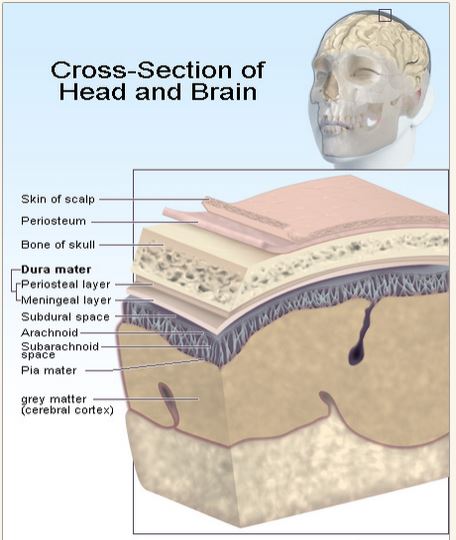
The purpose of the head, including the skull and face, is to protect the brain against injury. In addition to the bony protection, the brain is covered in tough fibrous layers called meninges and bathed in fluid that may provide a little shock absorption.
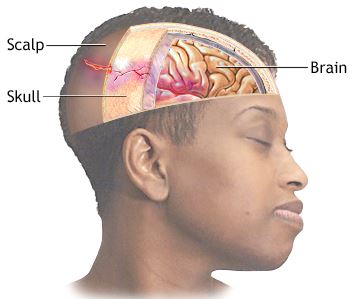
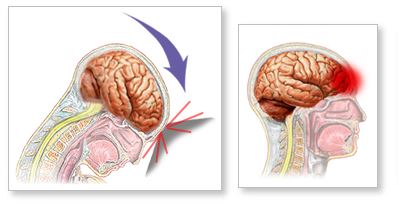
When an injury occurs, loss of brain function can occur even without visible damage to the head. Force applied to the head may cause the brain to be directly injured or shaken, bouncing against the inner wall of the skull. The trauma can potentially cause bleeding in the spaces surrounding the brain, bruise the brain tissue, or damage the nerve connections within the brain.
Caring for the victim with a head injury begins with making certain that the ABCs of resuscitation are addressed (airway, breathing, circulation). Many individuals with head injuries are multiple trauma victims and the care of their brain may take place at the same time other injuries are stabilized and treated.
Safety Videos |
Skull Fracture
The skull is made up of many bones that form a solid container for the brain. The face is the front part of the head and also helps protect the brain from injury. Depending upon the location of the fracture, there may or may not be a relationship between a fractured skull and underlying brain injury. Of note, a fracture, break, and crack all mean the same thing, that the integrity of the bone has been compromised. One term does not presume a more severe injury than the others. Fractures of the skull are described based on their location, the appearance of the fracture, and whether the bone has been pushed in.Location is important because some skull bones are thinner and more fragile than others. For example, the temporal bone above the ear is relatively thin and can be more easily broken than the occipital bone at the back of the skull. The middle meningeal artery is located in a groove within the temporal bone. It is susceptible to damage and bleeding if the fracture crosses that groove.
More Head Injury Overview
Intracranial Bleeding
- Intracranial (intra=within + cranium=skull) describes any bleeding within the skull. Intracerebral bleeding describes bleeding within the brain itself. More specific descriptions are used based upon where the blood is located.
- Bleeding in the skull may or may not be associated with a skull fracture. An intact skull is no guarantee that there is not underlying bleeding, or hemorrhage, in the brain or its surrounding spaces. For that reason, plain X-rays of the skull are not routinely performed.
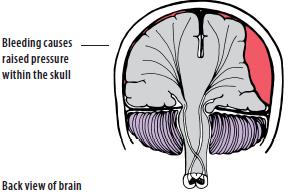
- Epidural, sub dural, and subarachnoid bleeding are terms that describe bleeding in the spaces between the meninges, the fibrous layered coverings of the brain. Sometimes, the terms hemorrhage (bleeding) and hematoma (blood clot) are interchanged. Because the skull is a solid box, any blood that accumulates within the skull can increase the pressure within it and compress the brain. Moreover, blood is irritating and can cause edema or swelling as excess fluid leaks from the surrounding blood vessels. This is no different than the swelling that can occur surrounding a bruise on an arm or leg. The only difference is that there is no room within the skull to accommodate that swelling.
 |
Safety Videos |
Two types of head injury
Head injuries can be classified as:
 |
Safety Videos |
- Open – with bleeding wounds to the face or head.
- Closed – no visible signs of injury to the face or head.
Closed head injuries
The soft, jelly-like brain is protected by the skull. The brain doesn’t fill the skull entirely – it floats in a clear, nourishing liquid called cerebrospinal fluid. This fluid acts as a shock absorbed, but its protective value is limited.The kinetic energy of a small knock to the head or face can be absorbed by the cerebrospinal fluid, but a hard impact can smash the brain against the inside of the skull. This can bruise the brain or tear blood vessels.If blood and blood serum start to escape,the swelling is contained within the skull. Intracranial pressure (pressure inside the skull) can cause permanent damage by literally crushing the brain.
Open head injuries
An open, or penetrating, head injury means you were hit with an object that broke the skull and entered the brain. This is more likely to happen when you move at high speed, such as going through the windshield during a car accident. It can also happen from a gunshot to the head.
Head injuries include:
- Concussion, in which the brain is shaken, is the most common type of traumatic brain injury.
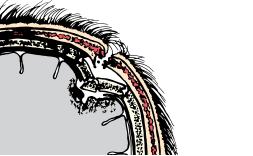
- Scalp wounds.
 |
Safety Videos |
- Skull fractures.
- In the brain tissue.
- In the layers that surround the brain
Spinal injuries
A person who has sustained a head injury may have also injured their spine. In elderly people, the force required to cause neck injuries is much less than in younger people. It can even occur from a standing height fall in the elderly.It is important to keep the injured person’s head in line with their neck. Avoid twisting their head or allowing their head to roll to the side. If you can, roll a t-shirt, towel or similar soft item and place it around their neck to keep their head straight. Don’t try to move them unless there is an urgent need to.
Signs and symptoms of spinal injuries may include:
- Body lying in an awkward, unnatural position.
- Skin feeling clammy and cool.
- Reporting unusual tingling sensations in the limbs or an absence of any sensation, including pain.
- Inability to move limbs.
 |
Safety Videos |
Toddlers and head injuries
Toddlers fall over all the time. Parents should note that:- A fall from the child’s own height usually isn’t enough to cause a serious head injury.
- The size of a bump on the head has no connection with the severity of injury.
- Minor head injuries, like a bump on the head, can be treated with cuddles and an age-appropriate dose of children’s pain-relieving syrup.
Examples of a heavy fall are falling down some stairs, rolling from a normal height change table to a hard floor, falling from a bed to a hard surface or a head strike on bedside furniture. If in doubt, see your doctor
Head injury is a common reason for an emergency room visit. A large number of people who suffer head injuries are children. TBI (traumatic brain injury) accounts for over 1 in 6 injury-related hospital admissions each year.
Alternative Names :
Brain injury; Head trauma
 |
Safety Videos |
Head Injury Causes:
Adults suffer head injuries most frequently due to falls, motor vehicle crashes, colliding or being struck by an object, and assaults. Falls and being struck are the most common causes of head injury in children.Causes
Common causes of head injury include:- Accidents at home, work, outdoors, or while playing sports
- Falls
- Physical assault
- Traffic accidents
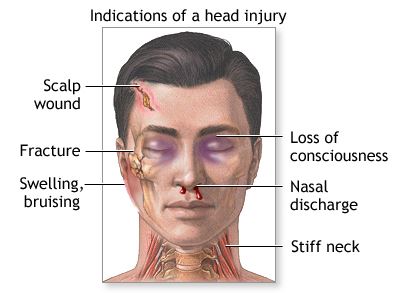
Symptoms and signs:
- altered conscious state, often deteriorating over time.
- blurred or double vision.
- a thumping or pounding headache
- nausea or vomiting
- loss of balance and coordination.
- altered sensation in the fingers or down one side of the body.
- loss of short-term memory – e.g. recent events.
- noisy breathing.
- leaking fluid from the nose or one ear.
- history of a blow to the head.
A severe head injury is when:
- Consciousness is lost for more than 30 seconds.
- You or your child are drowsy and do not respond to commands as normal.
- Has unequal pupils or arm and leg weakness.
- Has something stuck in their head (a phrase or sound).
- Has a second fit or convulsion, other than the single brief experience when injury occurred.
A moderate head injury:
- Has lost conciousness for less than 30 seconds.
- Is alert and responds to normal commands.
- Has vomited two or more times.
- Has a headache.
- One brief fit may have occurred straight after initial injury.
- May have large bruise, lump or cut on head.
Safety Videos |
A minor head injury:
- You or your child did not lose consciousness.
- Alert and interactive as usual.
- May have vomited but only once.
- May have bruising or cuts to the head.
- Otherwise normal.
Bruises from a Head Injury
Small bangs on the head can cause large
bruises and large soft swellings. This is because the scalp has a very
good blood supply and the bone of the skull is just under the skin,
meaning there is ‘no’ padding to absorb the knock.
Sometimes, the severity of the bruise
can be controlled with the application of ice to the site of swelling
(if there is no ice, try a packet of frozen veggies such as frozen
peas). Make sure you wrap the ice in a damp cloth, do not put something
very cold directly on the skin.
The swelling of the area of injury
should go down quite quickly, leaving the colored bruise and a small
spot of pain. If the swelling sight stays, you or your child should seek
medical advice.
Cuts from a Head Injury
Cuts on the scalp will bleed a lot
because of the good blood supply in the scalp. Put a clean dressing over
the cut and apply pressure to the cut for five or 10 minutes. If the
bleeding has not stopped within 10 minutes, it is recommended you seek
medical advice. If the cut is longer than 1cm long, the cut may have a
quicker and stronger recovery if treated by the doctor or medical
department.
First aid for head injury
In cases where there is a serious head injury, always call an ambulance.
 |
Safety Videos |
First aid when the injured person is conscious
Encourage the injured person to minimize any movement of their head or neck. Scalp injuries can bleed profusely, so control any significant blood loss from head wounds with direct pressure and a dressing. While examining the wound, avoid disturbing blood clots forming in the hair. Reassure the person and try to keep them calm.First aid when the injured person is unconscious
The person should not be moved unless
they are in immediate danger. Any unnecessary movement may cause greater
complications to the head injury itself, the spine or other associated
injuries. A good rule is that if the head is injured, the neck may be
injured too.
Your role is to protect the injured person from any potential dangers at the scene. You should also monitor their airway and breathing until the arrival of an ambulance. If the person’s breathing becomes impaired due to a problem with their airway, you may need to very carefully tilt their head back (and support it) until normal breathing returns. If the person stops breathing or has no pulse, cardiopulmonary resuscitation (CPR) may be required.
Your role is to protect the injured person from any potential dangers at the scene. You should also monitor their airway and breathing until the arrival of an ambulance. If the person’s breathing becomes impaired due to a problem with their airway, you may need to very carefully tilt their head back (and support it) until normal breathing returns. If the person stops breathing or has no pulse, cardiopulmonary resuscitation (CPR) may be required.
How you can help:
Safety Videos |
1. Assess the patient
- Assess the patient’s conscious state.
- If not fully conscious, place the patient on the side in a supported position.
- Check that the airway is clear and for signs of life every few minutes.
- If conscious, help the patient to rest in the position of greatest comfort.
- Sometimes patients with head injury may become agitated. Enlist friends or family to calm and reassure the patient. Consider calling the police if the safety of the patient or others becomes threatened.
2. Give care until arrival of the ambulance
- Cover any wound with a sterile dressing.
- If there is any discharge from the ears or nose, cover the area with a sterile dressing.
3. Monitor the patient
- DO NOT leave the patient alone and keep a constant watch on breathing and consciousness level.
- Check for and treat any other injuries that may have been overlooked.
Safety Videos |
4. Maintain body heat
- Cover the patient lightly with clothing or a blanket and protect from extremes of temperature.
- Note: When a head injury is suspected in a player during contact sport, the first aider should recommend that the patient does not return to the game. The patient should be seen by a doctor for clearance to continue playing.
Head Injury Prevention
- Falls are the number one cause of head injuries. Some, like toddlers falling when learning to walk, are unavoidable. Others may be preventable, especially in the elderly. Opportunities exist to minimize the risk of falling at home with the use of proper floor coverings, the use of assist devices such as canes and walkers, and by evaluating homes for high risk areas like bathrooms and stairs. A primary care health care practitioner or a county health nurse may be able to help with home assessment.
- Routine use of helmets may decrease head injury while riding a bicycle or motorcycle. Their use is also encouraged for sporting activities like skateboarding, skiing, and snowboarding.
Safety Videos |
Do Not
- Do NOT wash a head wound that is deep or bleeding a lot.
- Do NOT remove any object sticking out of a wound.
- Do NOT move the person unless absolutely necessary.
- Do NOT shake the person if he or she seems dazed.
- Do NOT remove a helmet if you suspect a serious head injury.
- Do NOT pick up a fallen child with any sign of head injury.
- Do NOT drink alcohol within 48 hours of a serious head injury.
Visit for Safety Videos: https://www.youtube.com/channel/UChREXvbLQ3fPxOLKflPRj_g


No comments:
Post a Comment