
Introduction:
A fracture is a break or crack in a bone that can be caused by an accident, fall, or blow. Symptoms include a snapping sound as bone breaks, bone protruding from skin, detectable deformity of bone, abnormal movement of bone, grating sensation during movement, pain and tenderness, difficulty in moving or using the affected part, swelling, and discoloration.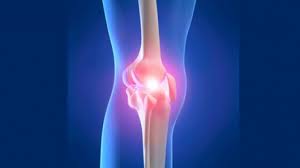
A sprain refers to stretched or torn tendons, ligaments, and blood vessels around a joint and can be caused by an accident, fall, or blow. Symptoms of a sprain include pain, tenderness, swelling, and discoloration in the joint area.
A muscle strain refers to stretched or torn muscle. It can be caused by excessive physical effort or improper posture during activity. Symptoms include pain, stiffness, and possibly swelling in the affected area.
It is sometimes difficult to tell the difference between a fracture and a sprain or strain until an X-ray has been performed. If you cannot tell, treat it as a fracture.
Definition:
- This is an injury to a bone, a joint, a ligament, or a tendon.
- Joint injuries usually involve a dislocation. This is where the bone has popped out of its socket. This may be accompanied with a fracture, a strain, or a sprain. It may pop back in it may not. Either way seek medical help. Do not push it back into place.
- Tendons are strong tissues that connect a muscle onto a bone. When a tendon tears it is called a strain. When they become torn they take a very long time to heal, many times never as good as before, and sometimes surgery is required to reattach them.
- When a ligament is torn it is called a sprain. Ligaments connect a bone to another bone. These are found around the joints. Ligaments are very strong, but, as with tendons, when they tear they take a long time to heal, never as good as before, and sometimes surgery is required.
Classification: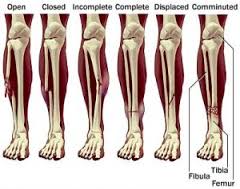
A Green stick Fracture is when the bone only cracks, and does not
fully break. Because these do not break the skin, they should be treated
as a Single Fracture. These fractures can be determined by using
x-rays.A Bending Fracture occurs in children only. In this case the bone bends but does not actually break.
A Single Fracture is when the bone breaks in one place, and does not pierce the skin.
A Compound Fracture is when the bone has broken into two pieces
A Commuted Fracture is when the bone is broken in more than two places or crushed.
An Open or Compound Fracture is when the bone has actually punctured the skin and is visible. These breaks are very severe and have a high risk on infection. DO NOT try to set these breaks yourself, instead get professional medical help immediately.
Causes:
- Any kind of force that is greater than what the tissue can withhold will cause such an injury. Some common activities include falling, twisting, getting hit, etc.
Fracture:
1. SEEK MEDICAL ATTENTION IMMEDIATELY. Call for EMS, or transport victim to emergency room after immobilizing affected area. Wait for EMS and DO NOT attempt to transport victim if you suspect head, back, or neck injury; if there's a visible deformity of bone; or if the victim cannot be splinted or transported without causing more pain.2. Suspect back or neck injury if victim is unconscious or has head injury, neck pain, or tingling in arms or legs. If neck or back injury suspected, DO NOT move victim unless necessary to save victim's life.
3. Immobilize and support affected bone in position found. DO NOT try to push protruding bone back into body or let victim move or use affected area.
4. Control any bleeding through direct pressure, but DO NOT elevate affected area.
5. If bone is protruding, cover with clean cloth once bleeding is controlled.
6. Observe for shock . DO NOT give victim anything to eat or drink.
7. Immobilize injured area, and, if no open wound present, apply ice pack wrapped in clean cloth.
Apply ice pack to affected
area and cover with cloth.
Immobilizing Fractured Bone:
- Check for sensation, warmth, and color of toes or fingers below suspected break.
- Place padded splint under area of suspected break:
Use belts or neckties to bind splint to arm but do not bind
on top of the break.
-Wrap splint in cloth or towels for padding.
-Bind splint to limb using neckties, cloth, belts, or rope. DO NOT bind directly over break.
3.Recheck often for sensation, warmth, and coloring. If fingers or toes turn blue or swell, loosen binding.
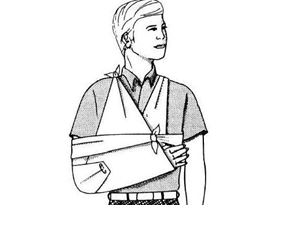
4.For arm or shoulder injury, place splinted arm in sling, with hand above elbow level. Bind arm to victim's body by wrapping towel or cloth over sling and around upper arm and chest; tie towel or cloth under victim's opposite arm.
Create a sling for arm injuries using whatever
cloth you can find.
Warning signs: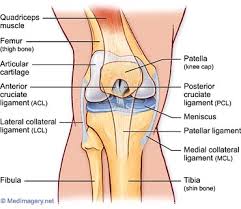
- A ‘snapping’ noise.
- Pain.
- Deformity.
- Inability to move.
- Swelling.
- Bruising.
Helping:
- Apply the RICE principle.
(i) Rest the injured body part and the entire casualty.
(ii) Immobilize the injured body part.
(iii) Cold compress over the injury to reduce swelling.
(iv) Elevate the injured body part if it can be done without causing further injury.
- Seek medical help.
- Do not rub or move the injured body part.
- If there is a protruding bone then bleeding will need to be taken care of by applying indirect pressure.
- Never straighten or realign an injured body part.
Notes:
- Bone fractures, if set properly, will heal fully in a few weeks and will be stronger than before. This happens because the area builds up with more calcification than before.
Prevention:
- Use safety equipment and wear it properly.
- Use seat belts and car seats.
- Keep joints and bones strong through weight bearing physical activities.
Splints:
The main purpose of a splint is to keep an injured body part
immobilized (e.g. a broken leg). It should only be done if paramedics
are going to take a long time arriving, or if you have to move the
person. Never move or try to realign the injured body part. Always
splint in the position found.There are three main types of splints:
- Anatomical: this means using a non-injured body part to immobilize an injured body part. E.g. to splint a broken left lower leg you would tie both legs together so the good leg provides support to the injured leg.
- Soft: this means using something like a thick sweat shirt, a jacket, a towel, or a blanket to wrap around and immobilize. This kind of splint works very well with hand or ankle/foot injuries.
- Rigid: this refers to using a firm object, such as a piece of wood, to immobilize. There are many types of rigid splints you can purchase or you can use whatever you see around you e.g. magazines, newspapers, umbrellas, etc.
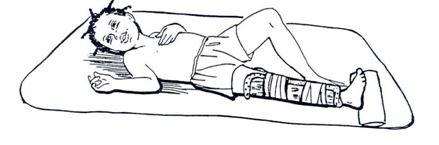
Splinting the lower leg using a rigid splint.
Splinting and slinging an injured forearm.
Splinting materials include splints, padding and bandages. Ensure that splints are long enough to immobilize the joint above and below the suspected fracture.
Before beginning first aid for fractures gather whatever splinting materials are available.
Splints may be improvised from such items as boards, poles, sticks, tree limbs, rolled magazines, rolled newspapers, or cardboard. If nothing is available for a splint, the person's chest can be used to immobilize a fractured arm and the uninjured leg can be used to immobilize, to some extent, the fractured leg.
Padding may be improvised from such items as a jacket, blanket, poncho or soft leafy vegetation. Put padding between the splint and the limb. Place extra padding at bony or sensitive areas.
Bandages may be improvised from belts or strips torn from clothing, towels or blankets. Narrow materials such as wire or cord should not be used to secure a splint in place.


No comments:
Post a Comment